Pick up band weaving using single thread changes
- Tool: Rigid heddle, shuttle from Nordic Design
- Yarn: Mercenised 8/4 cotton yarn Nya Emma, x2 colours from Falkgarn
As I’m getting more into band weaving and learning how to make better use of the rigid heddle, I attempted making a pick-up band weave.
We’re creating a weft based rep weave (the weft, threads in the heddle, cover the “inner” thread used to hold them together). There are two different methods to this type of weaving. When looking at older books on band weaving (Swedish produced in the 70s) they refer to them as “Method one” and “Method two”. Method two is the type most commonly found on the internet when you search for pikcup band weaving or refered to as “Baltic style weaving”. You have one set of “foundation” threads (two per pattern thread) and a thicker yearn used for the pattern.
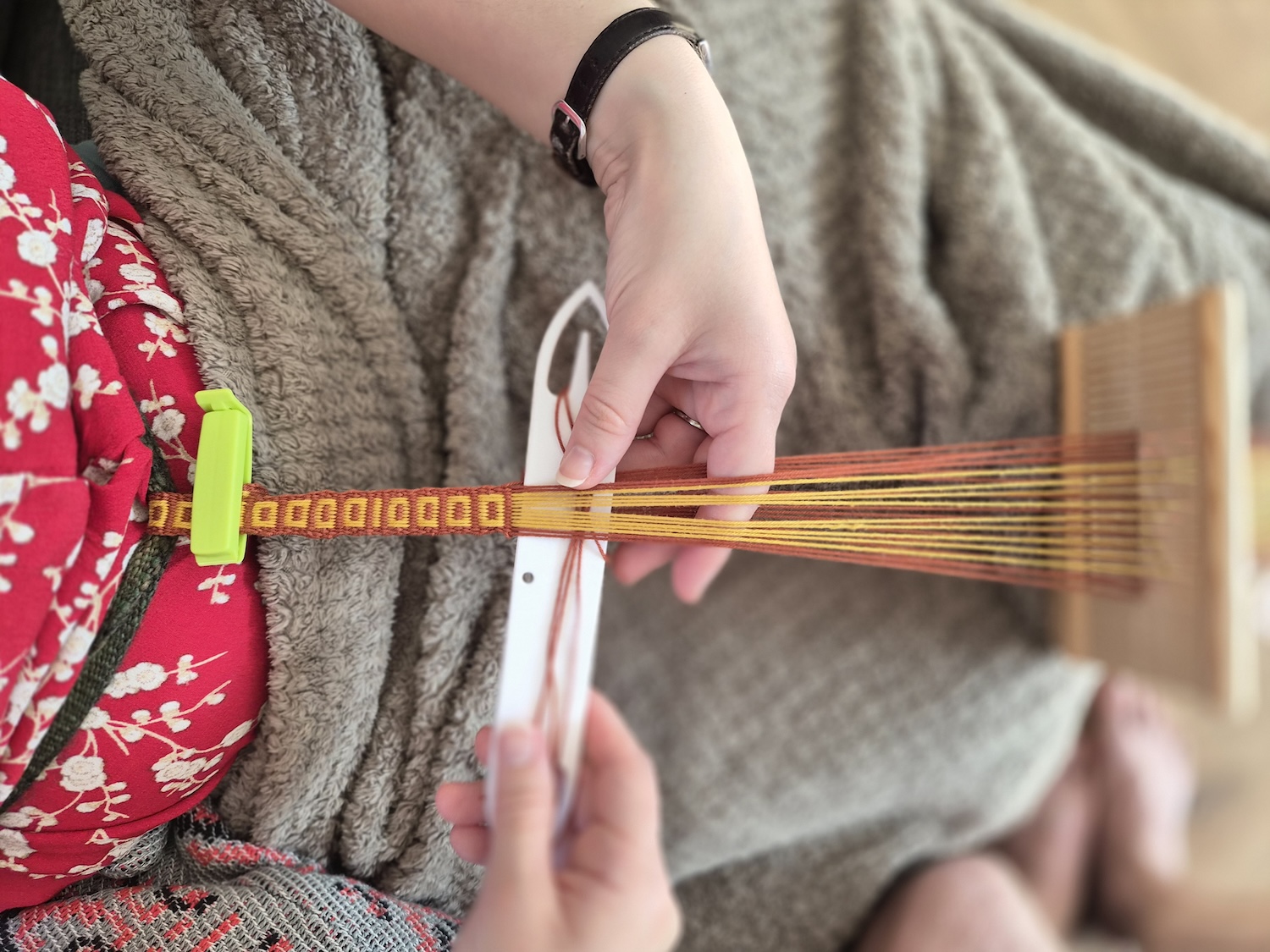
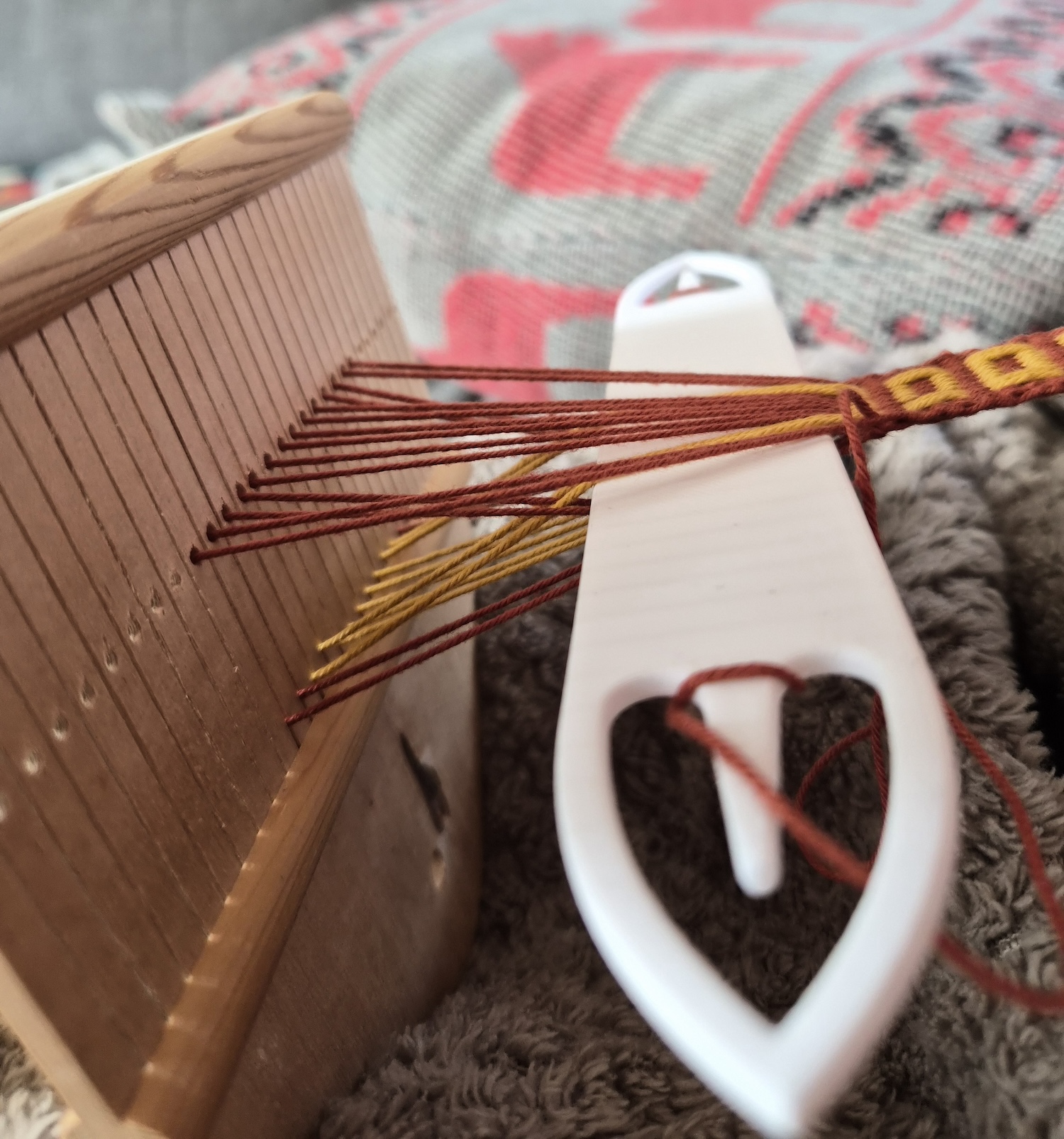
The first method is simpler. You have a ration of 1:1 and keep all colours on the same side. In my weave, I have two foundation colour threads on each side, then the colour threads in between. On the other side of this plain weave setup is a full row of foundation colour threads.
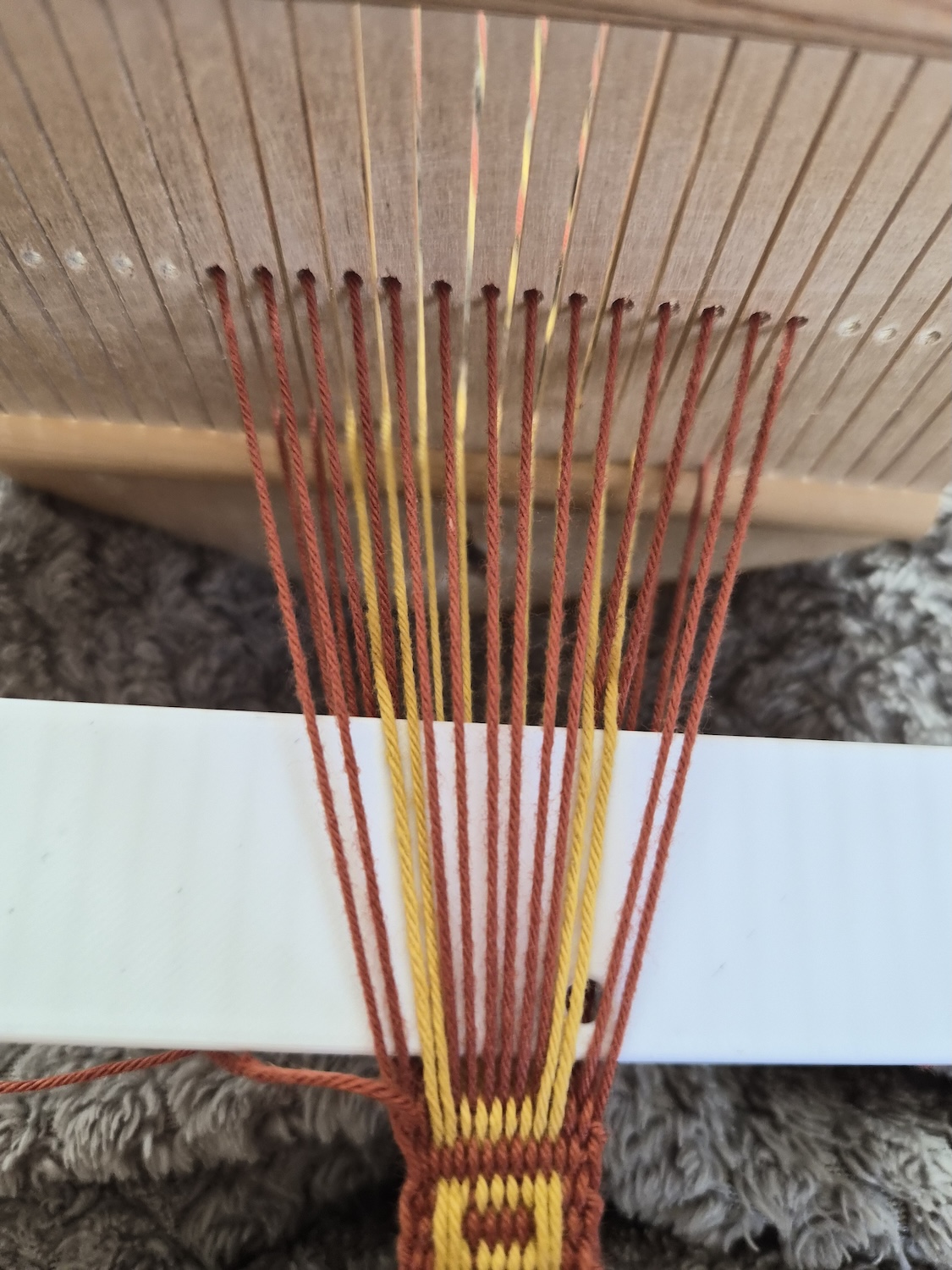
Video view of pickup
For those who prefer a video, here is how I worked the band.
Final results
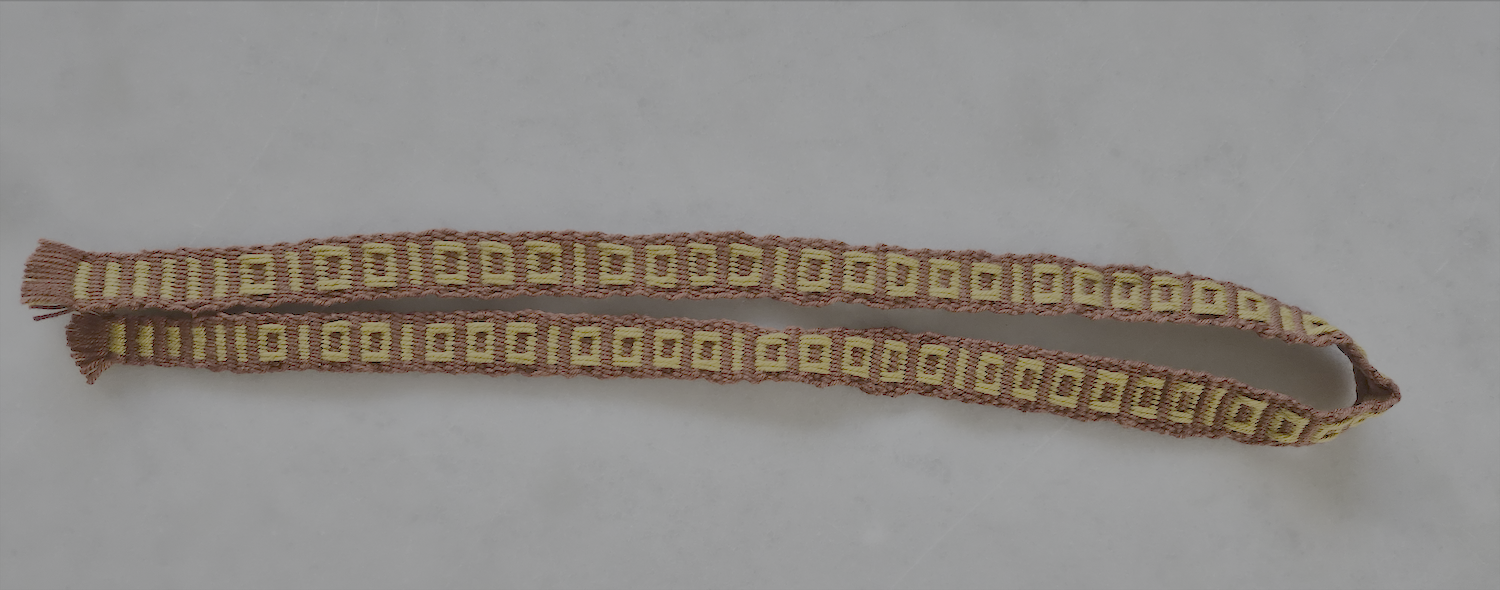
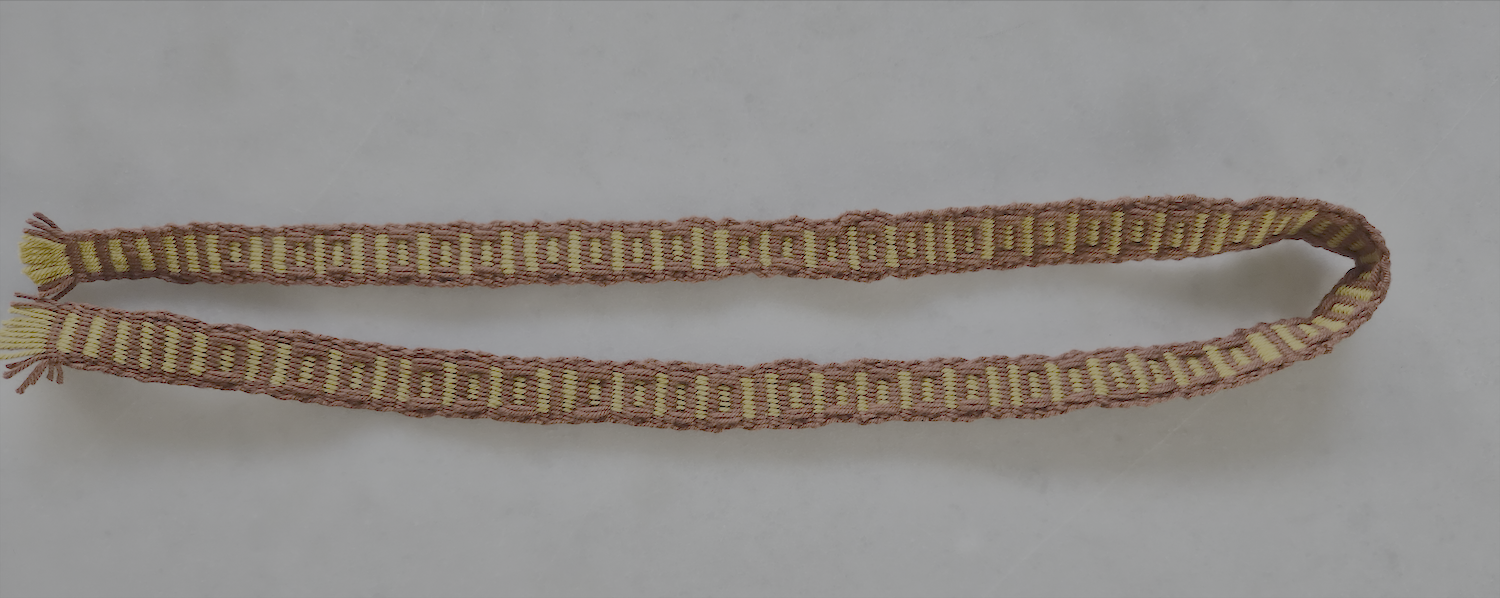
I made it way too short to be more useful than as a decorative headband, but it was due to me not measuring properly how much yearn was needed to make the pattern symmetrical (the squares and lines).
It was easier getting a good seal of the ends by using sewing threads to set up so you can pull in the ends (rather than same-weight yarn) (further instructions available in this article: Band weaving: First tries with a rigid heddle) and I liked the slimmed fringe decoration here as an alternative to braids or bigger tassels.
Indeed, pulling in the sides as you progress is what makes it more even in “tension”. I still have some work to do on that front but am getting better at it!