Table mounted loom: Weaving a table runner in a plain weave, rag carpet style
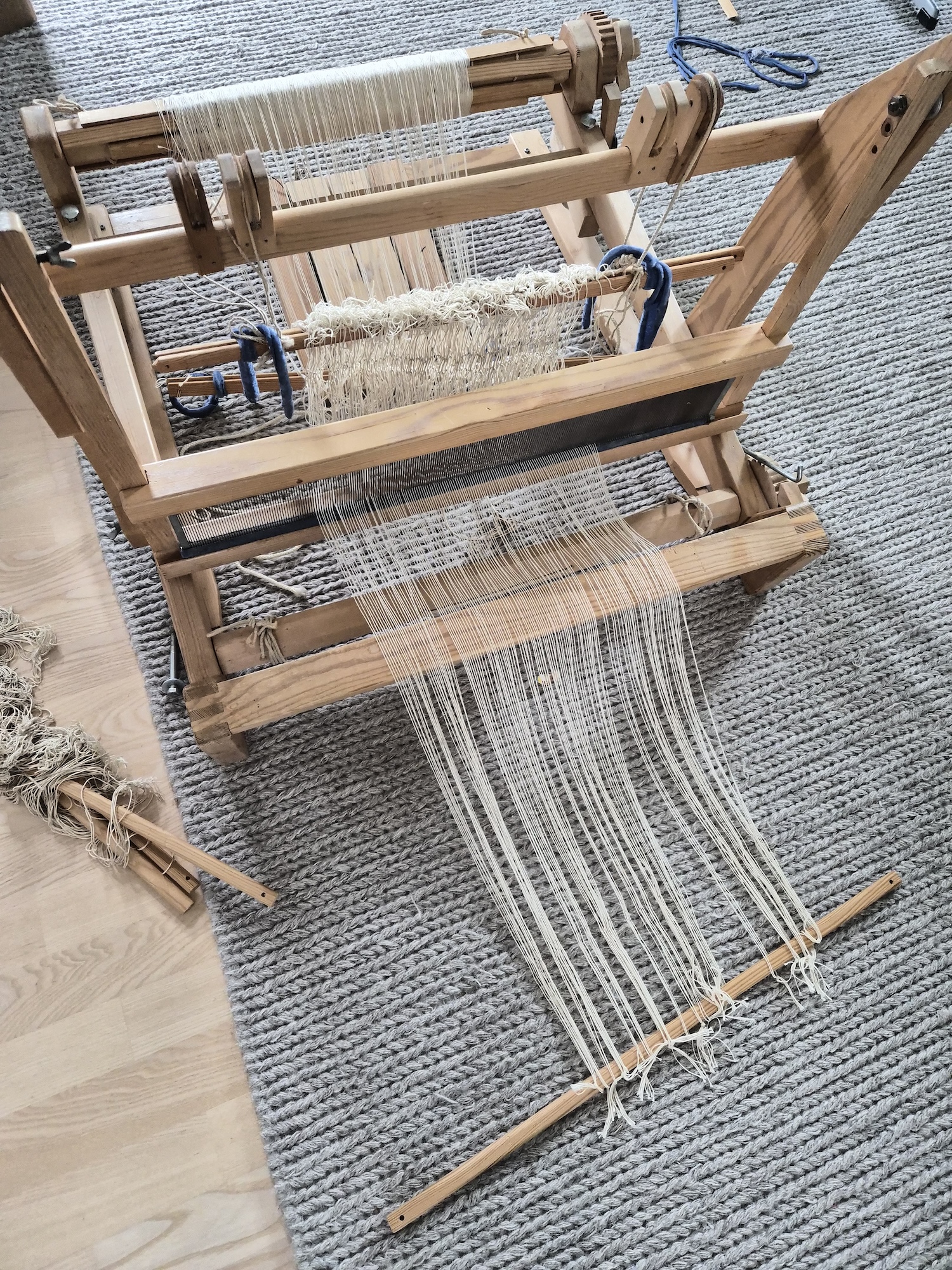
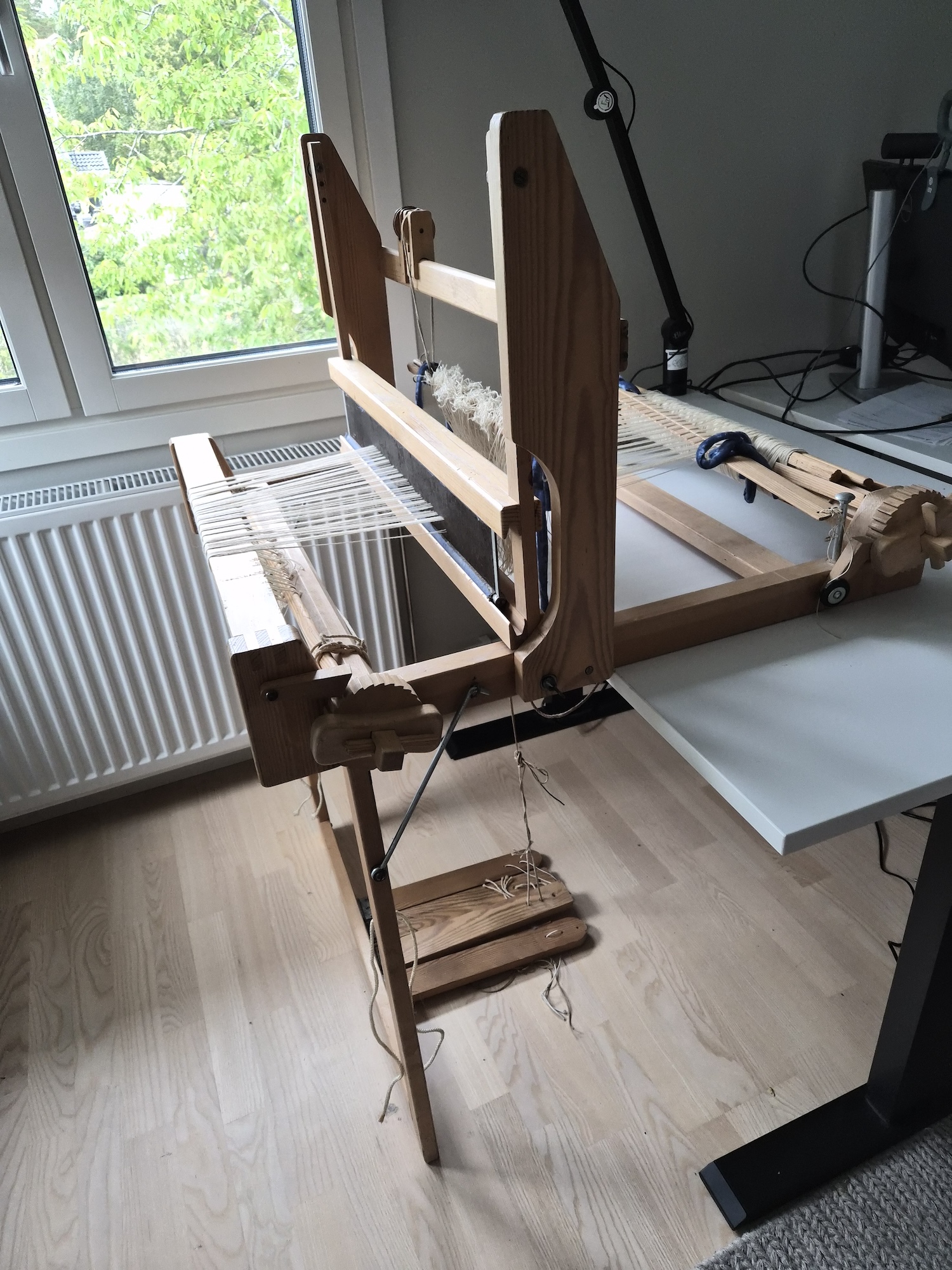
We spent a few weeks this summer at the cabin in Finland. A relative gifted us a table loom to bring back home. It already had warp thread prepared, but it was a puzzle and a half to grasp how to unpack the loom itself. I had hopes about placing it on the floor, but the system to control the heddles was pedals placed on the floor, so I had to grab a table to get it set up.
Using leftover fabric (cotton bedcloth I’ve used pieces of in the past to do clothing mockups) I turned it into thin stips to use as weft to make a rag rug.
Rag rugs has a long history in Swedish and Finnish culture, and I like the rustic look of table runners woven like tiny rag rugs. This was the first time I had a go at a proper weaving loom, so it was a bit of a guesswork to get it all mounted (the thread healds were in shambles) and going, but was quick to progress and get going.
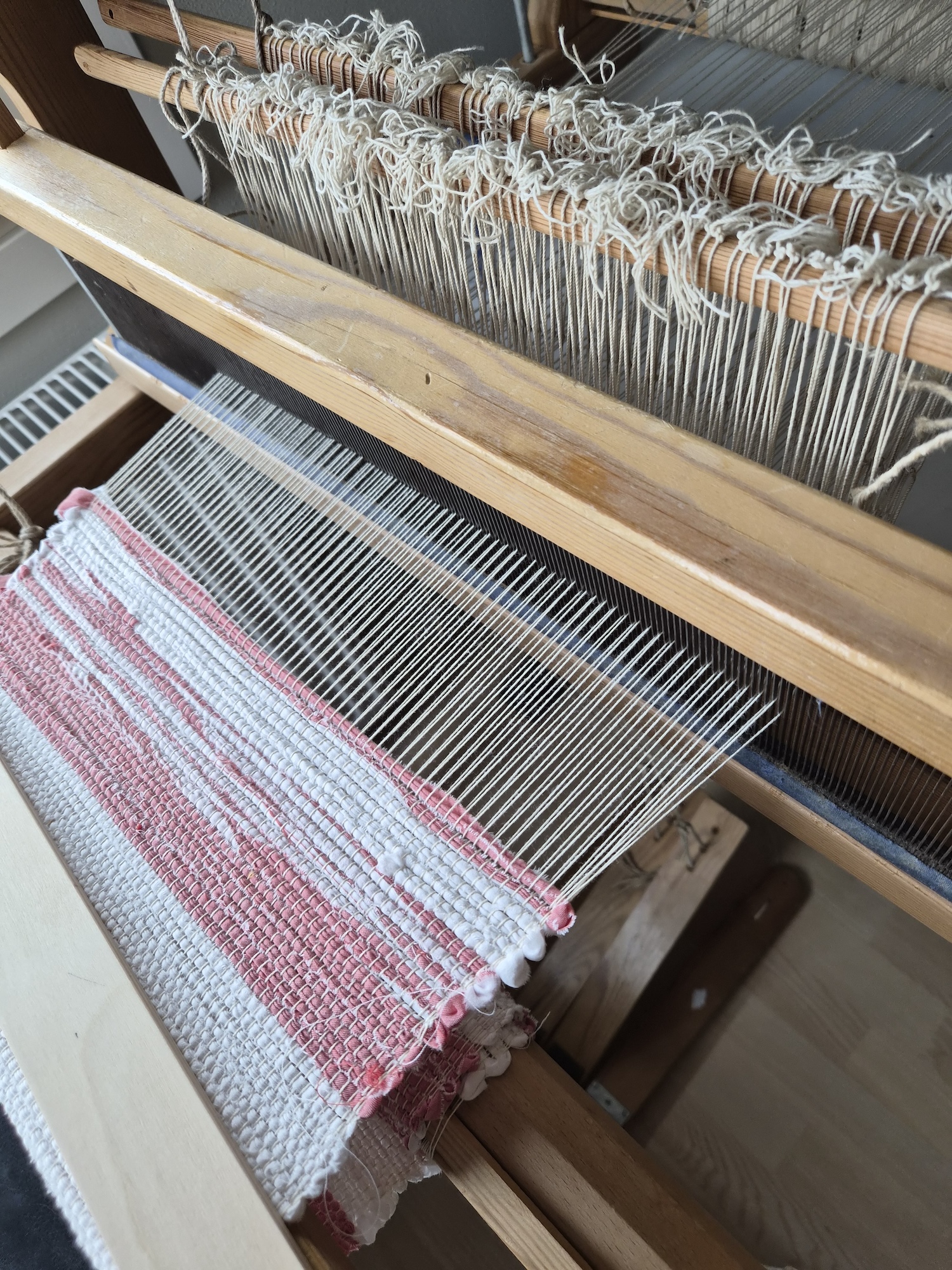
My daughter wove about half of it, with me jumping in when she wasn’t occupying it, so it has a truly eclectic try-as-you-go-woops-loose-thread-missed-some-sheds kind of look.
I did not make use of the full length of the warp, so am contemplating doing a second runner for practice or procuring some weft-appropriate weaving yarn to try out making a shawl in twill.
The project all in all didn’t take a lot of time at all (each “row” is quite thick so doesn’t take a lot of passes to progress) and has led to about five new books in my bookcase on the topic of weaving to grasp the fundamentals.
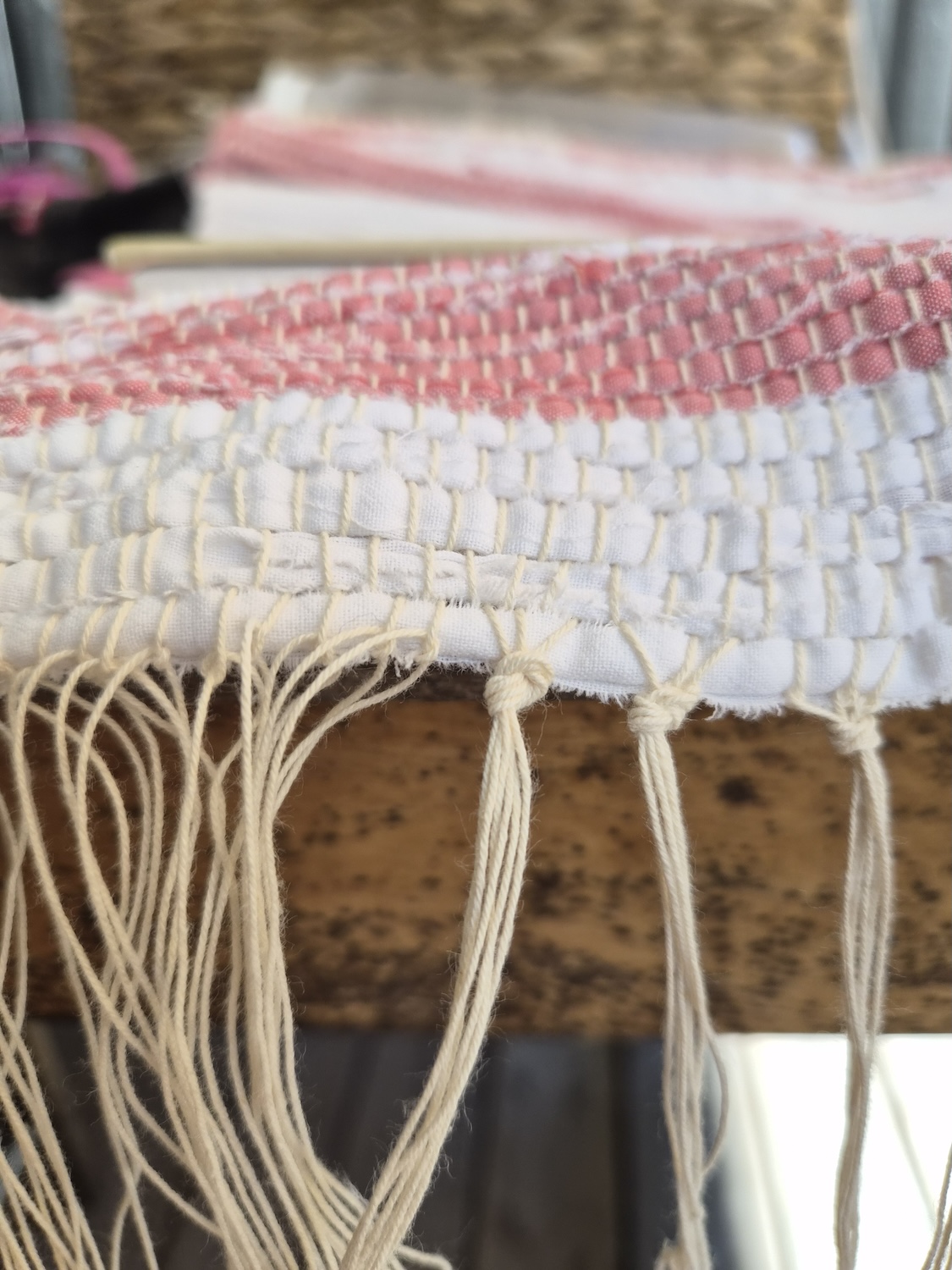
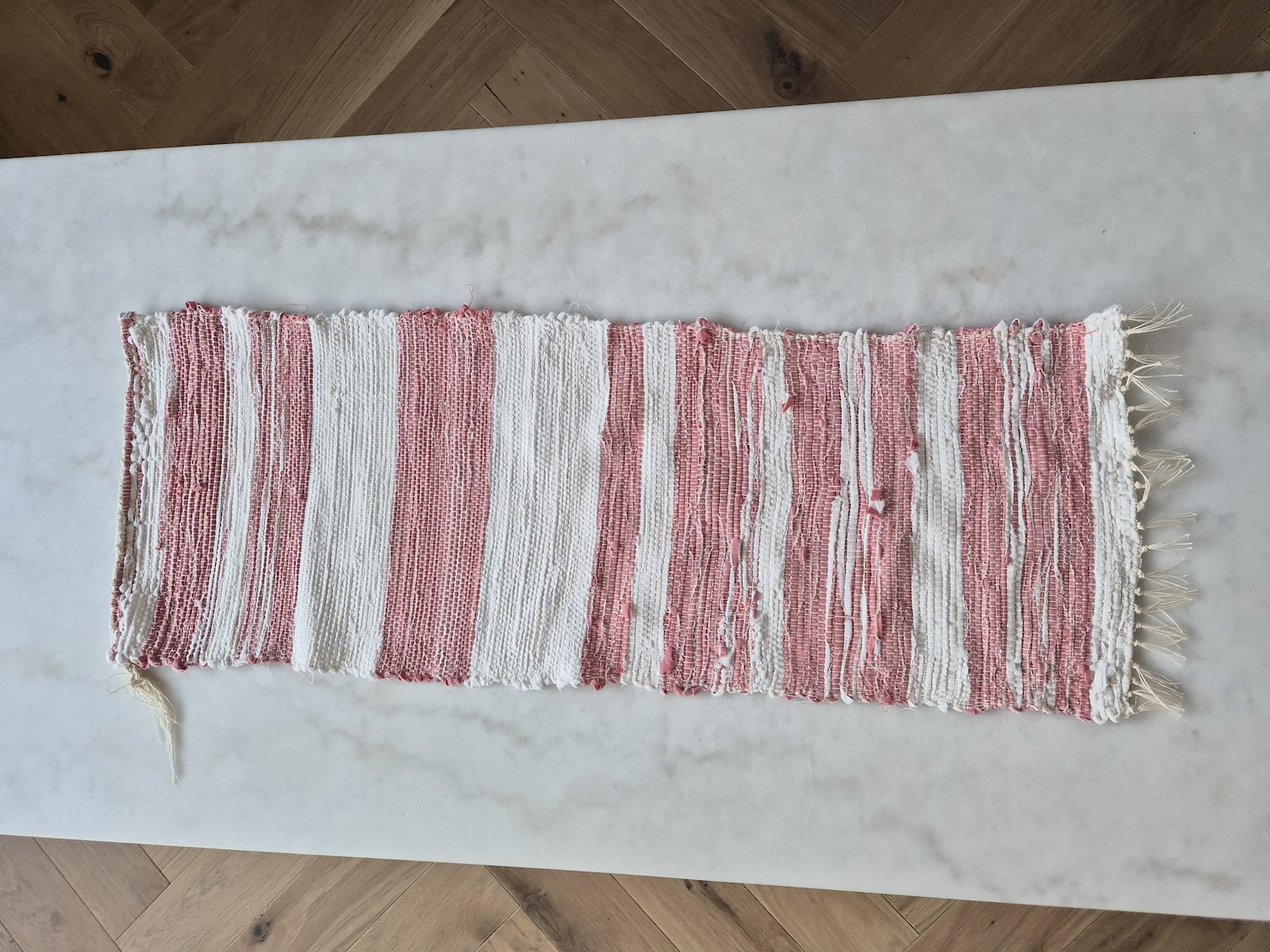
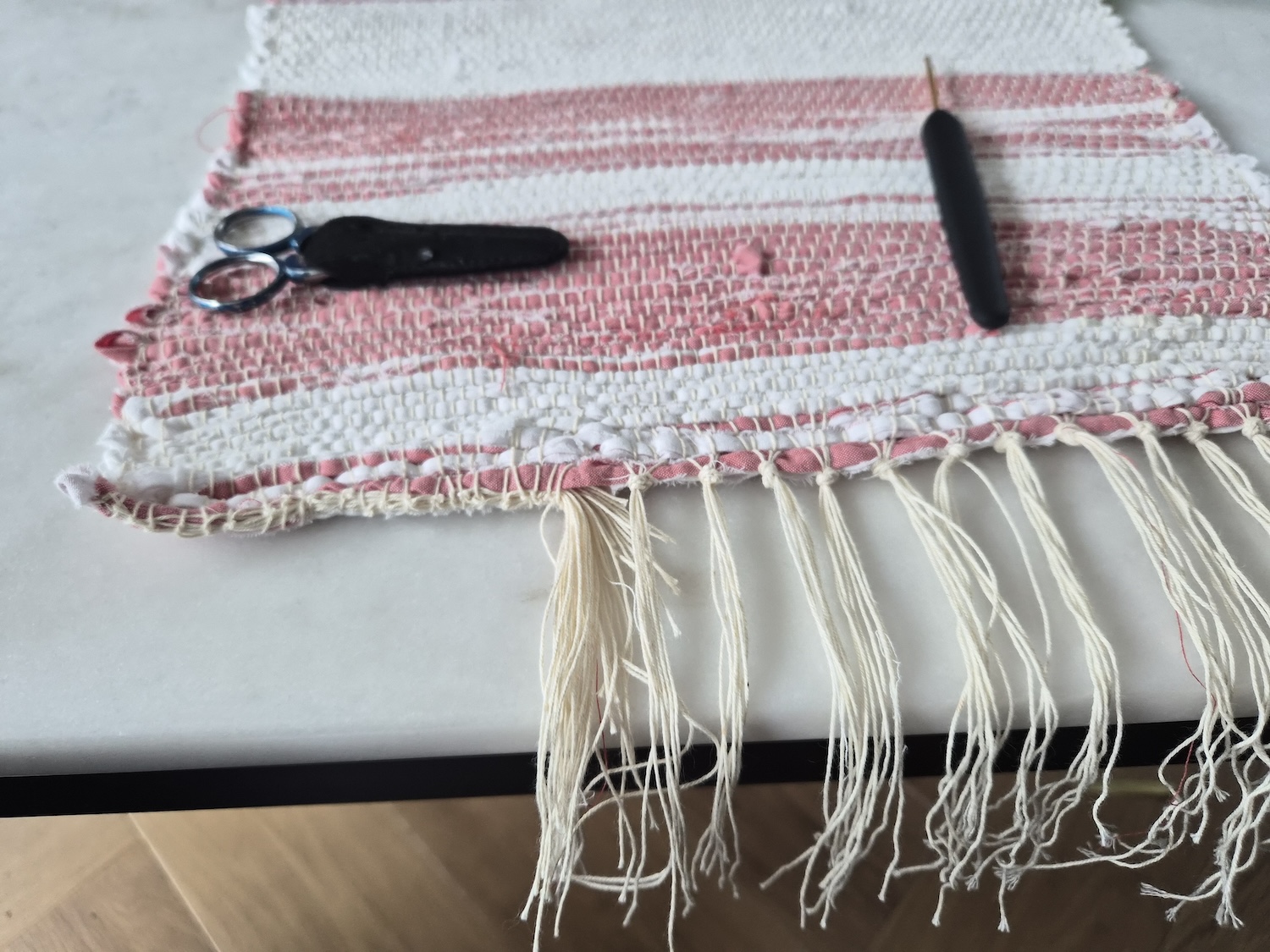
It was a lot of fun getting an intro to weaving on a loom this way. Having the warp already prepped helped a lot, and I could just practice getting the hang of the rythm of pushing a pedal to open one shed, use the beater, shuttle through, push other pedal to open the next shed… and so on.
I think the way the pedals have been tied to the heddles isn’t ideal as it had some issues with tension and balance, os there is room for improvement next time around.